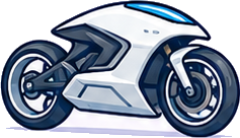
Prototype / concept model

Prototype / concept model Motorcycles

Prototype and concept motorcycles represent the physical manifestation of forward-thinking automotive ideas. In the motorcycle industry, manufacturers do not merely respond to immediate market demands; they actively explore how people will ride five, ten, or twenty years down the line. The origins of these machines trace back to design studios and research divisions where engineers work unconstrained by production costs, homologation laws, or assembly-line limitations. They serve as rolling testbeds for new aerodynamic principles, unproven structural materials, and novel powertrain architectures.

Radical Design and Ergonomic Concepts

Vehicles in this category directly challenge conventional riding postures and traditional chassis layouts. Bodywork is frequently fabricated from lightweight advanced composites, carbon fiber, titanium, or 3D-printed alloys. Traditional instrument clusters are often replaced by augmented reality visor links, head-up displays, or seamless digital touch surfaces integrated into the chassis. In terms of ergonomics, day-to-day comfort is rarely the primary goal. Instead, the focus is on testing how a rider interfaces with new controls, how extreme aerodynamic tucking reduces drag, or how alternative center-of-gravity placements alter handling dynamics.

Who Follows and Studies These Concepts?

Rather than prospective buyers looking for a showroom product, this category attracts observers who value innovation and future trends:

  • Technology Enthusiasts: Riders keen to observe early implementations of solid-state batteries, active gyroscopic balancing, and radar-assisted autonomy.
  • Designers and Engineers: Professionals analyzing shifts in industrial form, surface modeling, and structural engineering.
  • Trend Observers: Experienced riders interested in predicting which design cues and technological features will trickle down into next-generation production bikes.

Core Characteristics of Concept Machines

Across this category, several technical traits frequently stand out:

  • Experimental Powertrains: High-density electric drives, hydrogen combustion, alternative-fuel prototypes, or hybrid assist systems.
  • Non-Traditional Chassis: Hub-center steering, frameless structural engine cases, and variable-geometry swingarms that adapt to speed.
  • Active Aerodynamics: Dynamic winglets and air channels that adjust in real time based on lean angle and velocity.
  • Next-Gen Connectivity: Embedded lidar sensors, vehicle-to-everything (V2X) communication, and AI-driven telemetry diagnostics.

Evaluating a Concept or Prototype

When studying a prototype, it is important to look beyond styling and evaluate technical feasibility. Key considerations include whether the showcased technology can realistically scale for mass manufacturing, how it complies with regional safety standards, and which specific components are likely to appear on future street-legal models.

Who Is This Category Not For?

This category is not intended for riders seeking an immediate, practical purchase. The vast majority of prototypes and concept models are one-off showpieces without street homologation, registration viability, or retail availability. There is no spare parts catalog, dealer network, or warranty support for these machines. Riders who need a dependable daily commuter, predictable operating costs, and immediate road access should view this category purely as an educational and technical showcase rather than a buying guide.

Prototype / concept model Motorcycle Models

149 Prototype / concept model motorcycles listed

A Ural Prototype / concept model 2024
  • Engine
    Electric
  • Power
    60.0 hp (44.1 kW)
  • Displacement
  • Bore/Stroke
A2 Italjet Prototype / concept model 2023
  • Engine
    Single cylinder four-stroke
  • Power
    43.0 hp (31.6 kW)
  • Displacement
    450 cc
  • Bore/Stroke
A Ducati Prototype / concept model 2023
  • Engine
    Electric
  • Power
    147.5 hp (108.5 kW)
  • Displacement
  • Bore/Stroke
A Curtiss Prototype / concept model 2023
  • Engine
    Electric
  • Power
    110.0 hp (80.9 kW)
  • Displacement
  • Bore/Stroke
2023 Brixton Storr 500 Motorcycle A2 Brixton Prototype / concept model 2023
  • Engine
    Twin four-stroke
  • Power
    46.9 hp (34.5 kW)
  • Displacement
    486 cc
  • Bore/Stroke
A Yamaha Prototype / concept model 2022
  • Engine
    Twin four-stroke
  • Power
    72.4 hp (53.3 kW)
  • Displacement
    689 cc
  • Bore/Stroke
    80.0mm / 68.6mm
A Prototype / concept model 2022
  • Engine
    V2 four-stroke
  • Power
    120.0 hp (88.3 kW)
  • Displacement
    1,250 cc
  • Bore/Stroke
    97.5mm / 72.1mm
A Norton Prototype / concept model 2022
  • Engine
    V4 four-stroke
  • Power
    185.0 hp (136.1 kW)
  • Displacement
    1,200 cc
  • Bore/Stroke
    82.0mm / 56.8mm
A Lightning Prototype / concept model 2022
  • Engine
    Electric Electric
  • Power
    120.0 hp (88.3 kW)
  • Displacement
  • Bore/Stroke
A2 Husqvarna Prototype / concept model 2022
  • Engine
    Electric Electric
  • Power
    3.4 hp (2.5 kW)
  • Displacement
  • Bore/Stroke
A2 Husqvarna Prototype / concept model 2022
  • Engine
    Electric Electric
  • Power
    10.7 hp (7.9 kW)
  • Displacement
  • Bore/Stroke
A E-Racer Prototype / concept model 2022
  • Engine
    Electric Electric
  • Power
    74.0 hp (54.4 kW)
  • Displacement
  • Bore/Stroke
A BMW Prototype / concept model 2022
  • Engine
    Two cylinder boxer four-stroke
  • Power
    90.0 hp (66.2 kW)
  • Displacement
    1,800 cc
  • Bore/Stroke
A BMW Prototype / concept model 2022
  • Engine
    In-line six four-stroke
  • Power
    158.2 hp (116.4 kW)
  • Displacement
    1,649 cc
  • Bore/Stroke
    72.0mm / 67.5mm
A Honda Prototype / concept model 2021
  • Engine
    In-line four four-stroke
  • Power
    143.5 hp (105.5 kW)
  • Displacement
    998 cc
  • Bore/Stroke
    76.0mm / 56.5mm
A E-Racer Prototype / concept model 2021
  • Engine
    Electric Electric
  • Power
    74.0 hp (54.4 kW)
  • Displacement
  • Bore/Stroke
A BMW Prototype / concept model 2021
  • Engine
    Two cylinder boxer four-stroke
  • Power
    91.0 hp (66.9 kW)
  • Displacement
    1,802 cc
  • Bore/Stroke
    107.1mm / 100.0mm
A BMW Prototype / concept model 2021
  • Engine
    Two cylinder boxer four-stroke
  • Power
    91.0 hp (66.9 kW)
  • Displacement
    1,802 cc
  • Bore/Stroke
    107.1mm / 100.0mm
A2 BMW Prototype / concept model 2021
  • Engine
    Electric Electric
  • Power
    42.0 hp (30.9 kW)
  • Displacement
  • Bore/Stroke
## The Genesis of Prototype and Concept Motorcycles Prototype and concept motorcycles represent the physical manifestation of forward-thinking automotive ideas. In the motorcycle industry, manufacturers do not merely respond to immediate market demands; they actively explore how people will ride five, ten, or twenty years down the line. The origins of these machines trace back to design studios and research divisions where engineers work unconstrained by production costs, homologation laws, or assembly-line limitations. They serve as rolling testbeds for new aerodynamic principles, unproven structural materials, and novel powertrain architectures. ## Radical Design and Ergonomic Concepts Vehicles in this category directly challenge conventional riding postures and traditional chassis layouts. Bodywork is frequently fabricated from lightweight advanced composites, carbon fiber, titanium, or 3D-printed alloys. Traditional instrument clusters are often replaced by augmented reality visor links, head-up displays, or seamless digital touch surfaces integrated into the chassis. In terms of ergonomics, day-to-day comfort is rarely the primary goal. Instead, the focus is on testing how a rider interfaces with new controls, how extreme aerodynamic tucking reduces drag, or how alternative center-of-gravity placements alter handling dynamics. ## Who Follows and Studies These Concepts? Rather than prospective buyers looking for a showroom product, this category attracts observers who value innovation and future trends: - **Technology Enthusiasts:** Riders keen to observe early implementations of solid-state batteries, active gyroscopic balancing, and radar-assisted autonomy. - **Designers and Engineers:** Professionals analyzing shifts in industrial form, surface modeling, and structural engineering. - **Trend Observers:** Experienced riders interested in predicting which design cues and technological features will trickle down into next-generation production bikes. ## Core Characteristics of Concept Machines Across this category, several technical traits frequently stand out: - **Experimental Powertrains:** High-density electric drives, hydrogen combustion, alternative-fuel prototypes, or hybrid assist systems. - **Non-Traditional Chassis:** Hub-center steering, frameless structural engine cases, and variable-geometry swingarms that adapt to speed. - **Active Aerodynamics:** Dynamic winglets and air channels that adjust in real time based on lean angle and velocity. - **Next-Gen Connectivity:** Embedded lidar sensors, vehicle-to-everything (V2X) communication, and AI-driven telemetry diagnostics. ## Evaluating a Concept or Prototype When studying a prototype, it is important to look beyond styling and evaluate technical feasibility. Key considerations include whether the showcased technology can realistically scale for mass manufacturing, how it complies with regional safety standards, and which specific components are likely to appear on future street-legal models. ## Who Is This Category Not For? This category is not intended for riders seeking an immediate, practical purchase. The vast majority of prototypes and concept models are one-off showpieces without street homologation, registration viability, or retail availability. There is no spare parts catalog, dealer network, or warranty support for these machines. Riders who need a dependable daily commuter, predictable operating costs, and immediate road access should view this category purely as an educational and technical showcase rather than a buying guide.

Frequently Asked Questions

What is the Prototype / Concept motorcycle category?

It comprises experimental, one-off, or limited engineering studies built by manufacturers to showcase radical design philosophies, advanced aerodynamics, and future powertrain technologies outside mass-production rules.

Who should explore Prototype / Concept motorcycles?

Technology enthusiasts, industrial designers, and riders interested in tracking emerging engineering trends, alternative fuels, and future styling directions will find this category valuable.

What are the most prominent features of concept motorcycles?

They typically feature unconventional frame architectures, lightweight advanced composites, active aerodynamic surfaces, and experimental electric or hybrid powertrains.

Are they suitable for beginners, and what should be kept in mind?

They are not suitable for practical use or beginner riding, as virtually all concepts lack street homologation and are not commercially available. Observers should view them as technical previews rather than road-ready vehicles.