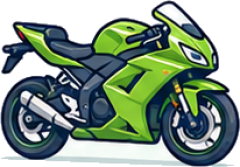
Minibike, sport

Minibike, sport Motorcycles

The mini sport category originated from the need for accessible, low-risk track training and grassroots motorcycle road racing. Designed initially to teach aspiring racers the nuances of body position and throttle control on go-kart tracks, these machines gained broader popularity for their fun factor and manageable scale. Today, they bridge the gap between small-displacement utility bikes and full-sized supersport machines, featuring full fairings, clip-on style handlebars, and track-inspired aesthetics.

Design, Ergonomics, and Handling Characteristics

Mini sport bikes share many visual cues with premier-class racing machines, but their proportions create a unique riding experience:

  • Committed triangle: The relationship between seat, handlebars, and footpegs mimics full-size sportbikes, encouraging an active riding stance.
  • Low center of gravity: With compact engine layouts and low seat heights, they remain easy to balance at a standstill and during low-speed maneuvers.
  • Rapid direction changes: Short wheelbases paired with smaller wheel diameters (often 10 to 14 inches) result in instant response to steering inputs.

Because curb weights generally stay well under 110 kg, these motorcycles allow riders to explore the limits of grip and lean angle without the intimidating inertia of large machines.

Target Audience: Skill Levels and Use Cases

Mini sport motorcycles cater to two primary groups. The first comprises beginners who want the appearance and posture of a sportbike without the daunting power and weight of a 600cc machine. The second group consists of intermediate and advanced track riders who use mini sport bikes as affordable training platforms to hone braking markers, apex targeting, and body mechanics on smaller circuits.

Key Shared Features in the Category

Across different manufacturers and models, several baseline features define this class:

  • Single-cylinder powerplants: Displacement typically ranges from 50cc to 150cc, tuned for reliable, predictable power delivery.
  • Full body fairings: Aerodynamic plastics protect the chassis and direct airflow, completing the racing appearance.
  • Sport-oriented suspension and brakes: Firm damping settings paired with hydraulic disc brakes ensure precise stopping power and chassis stability under load.
  • Lightweight construction: Minimalist frames engineered to keep weight low and agility high.

What to Look for When Buying

Prospective buyers should first determine whether they need a street-legal variant equipped with lighting and road homologation or a closed-course-only machine. Ergonomics are critical: taller riders should check for knee-to-handlebar clearance at full steering lock. Additionally, look into aftermarket support for consumables such as tires, brake pads, and replacement fairings, as training bikes frequently experience minor tip-overs.

Who Should Avoid Mini Sport Bikes?

This category is not designed for highway commuting or long-distance touring. Their top speeds are limited, making high-speed traffic hazardous, and the cramped riding position causes fatigue over extended journeys. Riders seeking plush suspension, pillion carrying capacity, or substantial luggage space should look toward standard, adventure, or touring categories instead.

Minibike, sport Motorcycle Models

125 Minibike, sport motorcycles listed

A1 Bluroc Minibike, sport 2022
  • Engine
    Single cylinder four-stroke
  • Power
    11.6 hp (8.5 kW)
  • Displacement
    125 cc
  • Bore/Stroke
A1 Skyteam Minibike, sport 2021
  • Engine
    Single cylinder four-stroke
  • Power
    7.8 hp (5.7 kW)
  • Displacement
    124 cc
  • Bore/Stroke
AM Skyteam Minibike, sport 2021
  • Engine
    Single cylinder four-stroke
  • Power
    2.6 hp (1.9 kW)
  • Displacement
    49 cc
  • Bore/Stroke
AM Skyteam Minibike, sport 2021
  • Engine
    Single cylinder four-stroke
  • Power
    2.7 hp (2.0 kW)
  • Displacement
    49 cc
  • Bore/Stroke
A1 Skyteam Minibike, sport 2021
  • Engine
    Single cylinder four-stroke
  • Power
    7.8 hp (5.7 kW)
  • Displacement
    124 cc
  • Bore/Stroke
A1 Nipponia Minibike, sport 2021
  • Engine
    Single cylinder four-stroke
  • Power
    9.8 hp (7.2 kW)
  • Displacement
    125 cc
  • Bore/Stroke
A1 Lexmoto Minibike, sport 2021
  • Engine
    Single cylinder four-stroke
  • Power
    8.2 hp (6.0 kW)
  • Displacement
    124 cc
  • Bore/Stroke
    56.5mm / 49.6mm
Thumpstar Minibike, sport 2020
  • Engine
    Single cylinder four-stroke
  • Power
  • Displacement
    230 cc
  • Bore/Stroke
Thumpstar Minibike, sport 2020
  • Engine
    Single cylinder four-stroke
  • Power
  • Displacement
    140 cc
  • Bore/Stroke
Thumpstar Minibike, sport 2020
  • Engine
    Single cylinder four-stroke
  • Power
  • Displacement
    125 cc
  • Bore/Stroke
AM Thumpstar Minibike, sport 2020
  • Engine
    Single cylinder four-stroke
  • Power
  • Displacement
    50 cc
  • Bore/Stroke
Thumpstar Minibike, sport 2020
  • Engine
    Single cylinder four-stroke
  • Power
  • Displacement
    70 cc
  • Bore/Stroke
A2 Ohvale Minibike, sport 2020
  • Engine
    Single cylinder four-stroke
  • Power
    24.0 hp (17.7 kW)
  • Displacement
    187 cc
  • Bore/Stroke
    62.0mm / 62.0mm
A2 Ohvale Minibike, sport 2020
  • Engine
    Single cylinder four-stroke
  • Power
    15.0 hp (11.0 kW)
  • Displacement
    156 cc
  • Bore/Stroke
    60.0mm / 55.5mm
A1 Ohvale Minibike, sport 2020
  • Engine
    Single cylinder four-stroke
  • Power
    11.0 hp (8.1 kW)
  • Displacement
    107 cc
  • Bore/Stroke
    52.4mm / 49.5mm
A1 Ohvale Minibike, sport 2020
  • Engine
    Single cylinder four-stroke
  • Power
    11.0 hp (8.1 kW)
  • Displacement
    113 cc
  • Bore/Stroke
    54.0mm / 49.5mm
A1 Motomel Minibike, sport 2020
  • Engine
    Single cylinder four-stroke
  • Power
    7.1 hp (5.2 kW)
  • Displacement
    108 cc
  • Bore/Stroke
    52.4mm / 49.5mm
A2 Lifan Minibike, sport 2020
  • Engine
    Single cylinder four-stroke
  • Power
    12.7 hp (9.4 kW)
  • Displacement
    149 cc
  • Bore/Stroke
    57.3mm / 57.8mm
A1 Italika Minibike, sport 2020
  • Engine
    Single cylinder four-stroke
  • Power
    2.5 hp (1.8 kW)
  • Displacement
    80 cc
  • Bore/Stroke
GRC Moto Minibike, sport 2020
  • Engine
    Single cylinder four-stroke
  • Power
  • Displacement
    113 cc
  • Bore/Stroke
    54.0mm / 49.5mm
AM Blata Minibike, sport 2019
  • Engine
    Single cylinder two-stroke
  • Power
    14.1 hp (10.4 kW)
  • Displacement
    40 cc
  • Bore/Stroke
A1 Benelli Minibike, sport 2019
  • Engine
    Single cylinder four-stroke
  • Power
    11.1 hp (8.2 kW)
  • Displacement
    125 cc
  • Bore/Stroke
    54.0mm / 54.5mm
BucciMoto Minibike, sport 2018
  • Engine
    Single cylinder four-stroke
  • Power
  • Displacement
    110 cc
  • Bore/Stroke
BucciMoto Minibike, sport 2018
  • Engine
    Single cylinder four-stroke
  • Power
  • Displacement
    150 cc
  • Bore/Stroke
AM Adly Minibike, sport 2018
  • Engine
    Single cylinder two-stroke
  • Power
  • Displacement
    49 cc
  • Bore/Stroke
A1 Skyteam Minibike, sport 2016
  • Engine
    Single cylinder four-stroke
  • Power
    10.1 hp (7.4 kW)
  • Displacement
    124 cc
  • Bore/Stroke
    56.5mm / 49.5mm
AM Skyteam Minibike, sport 2016
  • Engine
    Single cylinder four-stroke
  • Power
  • Displacement
    49 cc
  • Bore/Stroke
    39.0mm / 41.4mm
AM Skyteam Minibike, sport 2016
  • Engine
    Single cylinder four-stroke
  • Power
  • Displacement
    49 cc
  • Bore/Stroke
    39.0mm / 41.4mm
A1 Skyteam Minibike, sport 2016
  • Engine
    Single cylinder four-stroke
  • Power
    9.4 hp (6.9 kW)
  • Displacement
    124 cc
  • Bore/Stroke
    56.5mm / 49.5mm
Polini Minibike, sport 2016
  • Engine
    Single cylinder four-stroke
  • Power
  • Displacement
    121 cc
  • Bore/Stroke
    52.4mm / 56.0mm
## What Is a Mini Sport Bike and How Did It Evolve? The mini sport category originated from the need for accessible, low-risk track training and grassroots motorcycle road racing. Designed initially to teach aspiring racers the nuances of body position and throttle control on go-kart tracks, these machines gained broader popularity for their fun factor and manageable scale. Today, they bridge the gap between small-displacement utility bikes and full-sized supersport machines, featuring full fairings, clip-on style handlebars, and track-inspired aesthetics. ## Design, Ergonomics, and Handling Characteristics Mini sport bikes share many visual cues with premier-class racing machines, but their proportions create a unique riding experience: - **Committed triangle:** The relationship between seat, handlebars, and footpegs mimics full-size sportbikes, encouraging an active riding stance. - **Low center of gravity:** With compact engine layouts and low seat heights, they remain easy to balance at a standstill and during low-speed maneuvers. - **Rapid direction changes:** Short wheelbases paired with smaller wheel diameters (often 10 to 14 inches) result in instant response to steering inputs. Because curb weights generally stay well under 110 kg, these motorcycles allow riders to explore the limits of grip and lean angle without the intimidating inertia of large machines. ## Target Audience: Skill Levels and Use Cases Mini sport motorcycles cater to two primary groups. The first comprises beginners who want the appearance and posture of a sportbike without the daunting power and weight of a 600cc machine. The second group consists of intermediate and advanced track riders who use mini sport bikes as affordable training platforms to hone braking markers, apex targeting, and body mechanics on smaller circuits. ## Key Shared Features in the Category Across different manufacturers and models, several baseline features define this class: - **Single-cylinder powerplants:** Displacement typically ranges from 50cc to 150cc, tuned for reliable, predictable power delivery. - **Full body fairings:** Aerodynamic plastics protect the chassis and direct airflow, completing the racing appearance. - **Sport-oriented suspension and brakes:** Firm damping settings paired with hydraulic disc brakes ensure precise stopping power and chassis stability under load. - **Lightweight construction:** Minimalist frames engineered to keep weight low and agility high. ## What to Look for When Buying Prospective buyers should first determine whether they need a street-legal variant equipped with lighting and road homologation or a closed-course-only machine. Ergonomics are critical: taller riders should check for knee-to-handlebar clearance at full steering lock. Additionally, look into aftermarket support for consumables such as tires, brake pads, and replacement fairings, as training bikes frequently experience minor tip-overs. ## Who Should Avoid Mini Sport Bikes? This category is not designed for highway commuting or long-distance touring. Their top speeds are limited, making high-speed traffic hazardous, and the cramped riding position causes fatigue over extended journeys. Riders seeking plush suspension, pillion carrying capacity, or substantial luggage space should look toward standard, adventure, or touring categories instead.

Frequently Asked Questions

What is the Mini Sport category?

The Mini Sport category consists of lightweight, small-displacement motorcycles featuring full race-style fairings and sporty geometry on a scaled-down chassis. They are built for precise handling on tight tracks, training sessions, and agile urban riding.

Who should choose a Mini Sport bike?

Novices wanting to learn sportbike ergonomics and cornering fundamentals without the weight of large machines, as well as experienced riders seeking track-day practice tools, are the primary audience. They also suit riders of smaller stature looking for low seat heights.

What are the most defining features of Mini Sport motorcycles?

Their key characteristics are very low curb weight, compact wheel diameters, aerodynamically styled bodywork, and a forward-leaning riding triangle. These elements provide razor-sharp steering response and forgiving handling dynamics.

Is it suitable for beginners, and what should buyers watch out for?

Yes, their controllable power output makes them accessible, though the aggressive riding stance can cause wrist fatigue over longer sessions. Buyers should verify whether the model is street-legal or track-only and ensure adequate legroom before purchasing.